Sustainable Materials Wholesale Bag Buyers Must Know
October 20, 2026
For years, sustainable bags have all been the same. A tote bag made out of recycled textile with an eco-friendly tag. That approach feels dated now.
In 2026, the conversation is much more specific. Buyers want to know what percentage of a material is actually recycled. They’re asking where fibers come from, what coatings have been added, and whether a supposedly sustainable bag will still look good after months of use.
And shoppers? They’re asking better questions too.
For wholesale buyers, this means the material itself has become part of the selling point. Fortunately, there are plenty of interesting options on the table.
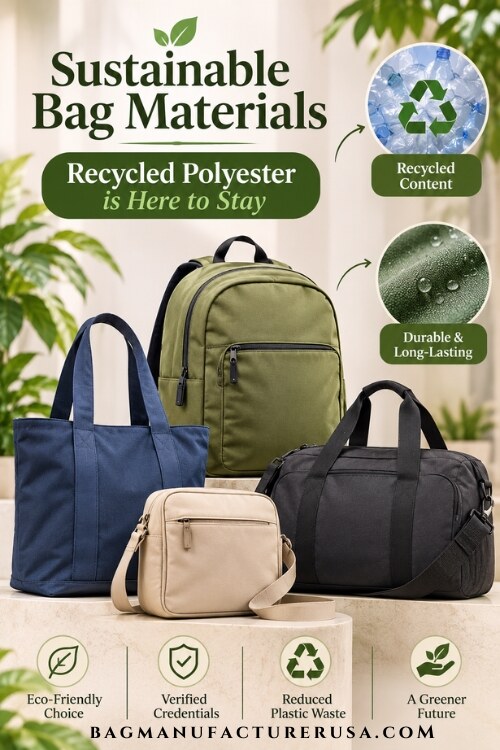
Recycled polyester might not be new to sustainable fashion, but it has always been around. It’s practical.
Everyday totes, laptop carriers, travel duffels, gym bags, and backpacks undergo a certain amount of wear.
Backpacks, gym bags, travel duffels, laptop carriers, and everyday totes all need to handle a fair amount of wear. Recycled polyester can provide that durability while making use of existing plastic scrap.
Still, buyers wouldn’t necessarily jump at the word “recycled” when shopping around.
How much recycled content does the material contain? What is the lining made from? Are there credentials behind the claims? The questions may seem less glamorous but are worth asking.
Some bags need to be tough without feeling like luggage.
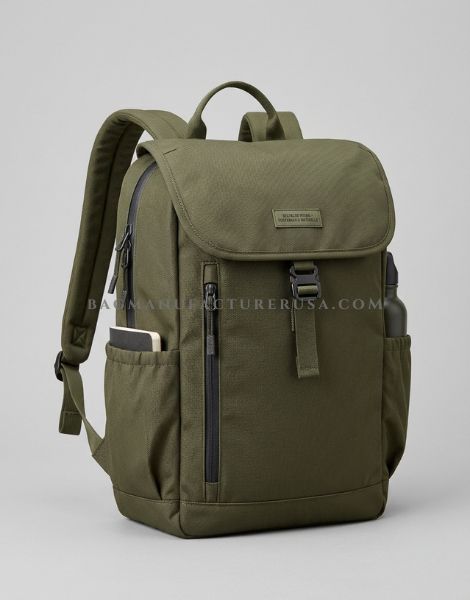
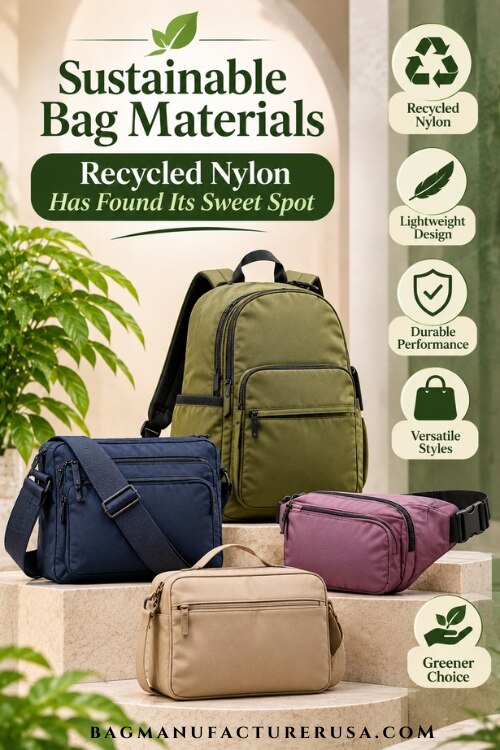
That’s where recycled nylon fits in nicely. It works particularly well for crossbody bags, lightweight backpacks, belt bags, organizers, and packable travel pieces.
It also doesn’t have to scream “eco product.” Recycled nylon bags can look modern once they come in minimalist shapes, sporty straps, utility pockets, punchy shades, and sleek finishes.
It’s important since many customers want the greener alternative. That doesn’t mean they want sustainability to be the only thing about the bag.
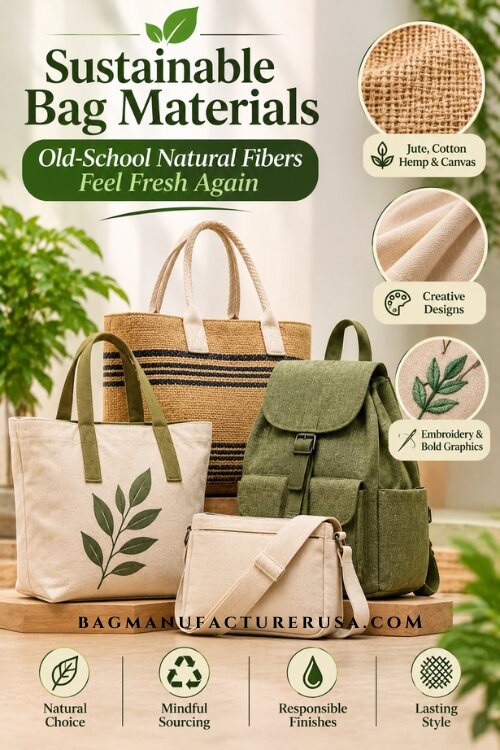
Jute, cotton, hemp, and canvas have been around forever. Boring? Not necessarily.
Design is changing the equation.
Chunky woven textures can give beach bags more personality. Washed canvas works beautifully for relaxed shoppers and carryalls. Embroidery, contrast handles, unusual shapes, and bold graphics can turn the humble cotton tote into something people actually want to style.
There is still some homework involved for buyers. Fiber sourcing matters, as do dyes, coatings, and fabric blends. A natural base material can lose some of its sustainability appeal once layers of difficult-to-recycle finishes enter the picture.
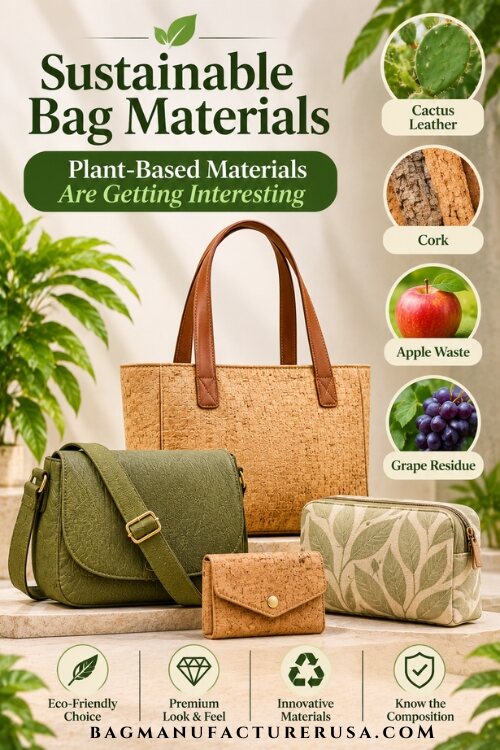
Here’s where the bag material conversation gets a little more experimental.
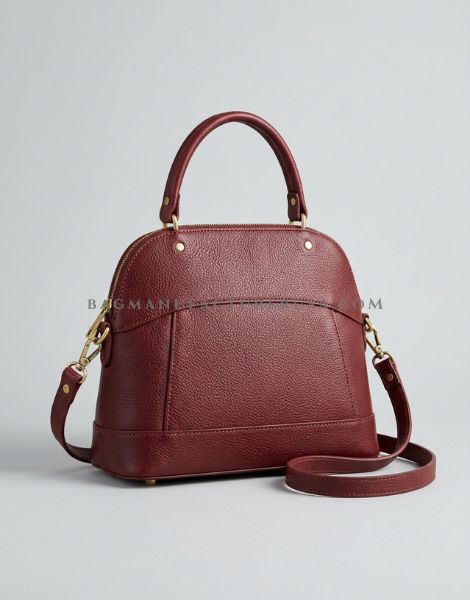
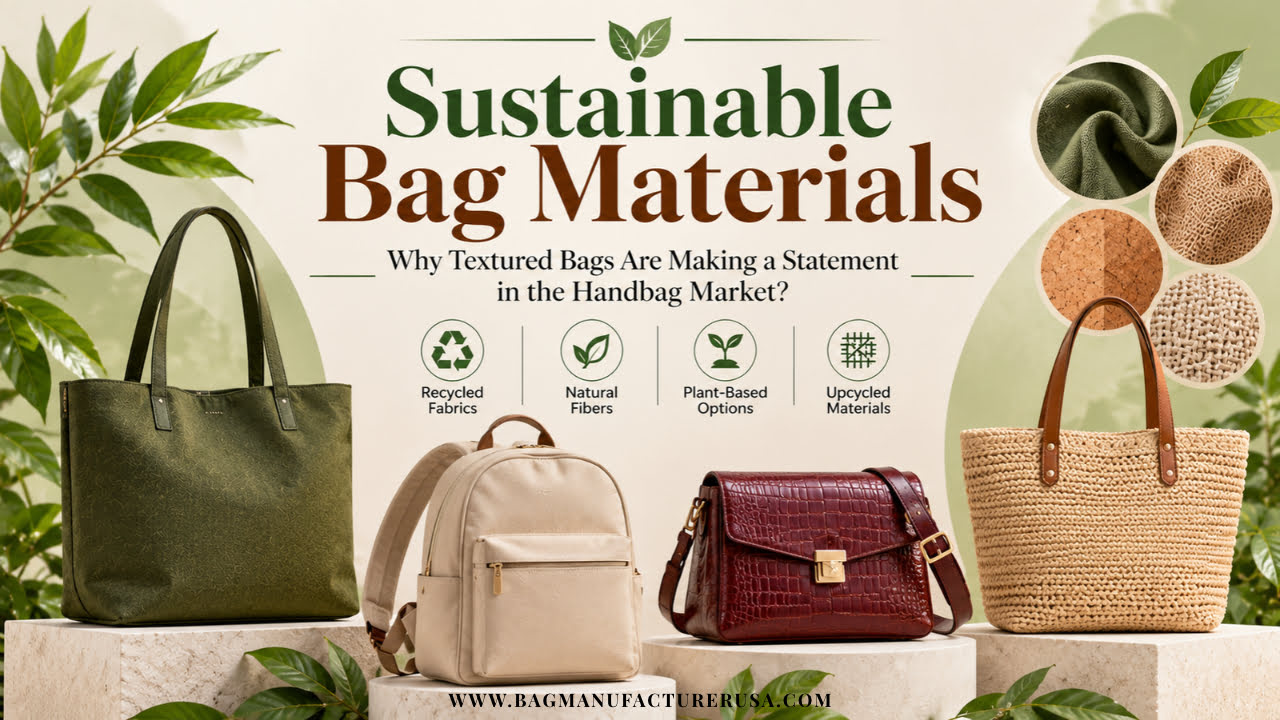
Cactus, cork, apple waste, grape residue, and other plant-derived sources are being explored as alternatives to conventional materials, particularly for handbags, wallets, sleeves, and smaller accessories.
They also have obvious visual appeal. Interesting textures and finishes can help these pieces feel premium rather than overly rustic.
There’s one important catch, though. “Plant-based” does not always mean a material is completely made from plants. Some options use coatings, backings, or synthetic binders. Wholesale buyers need to know about the exact composition rather than falling for the marketing language.
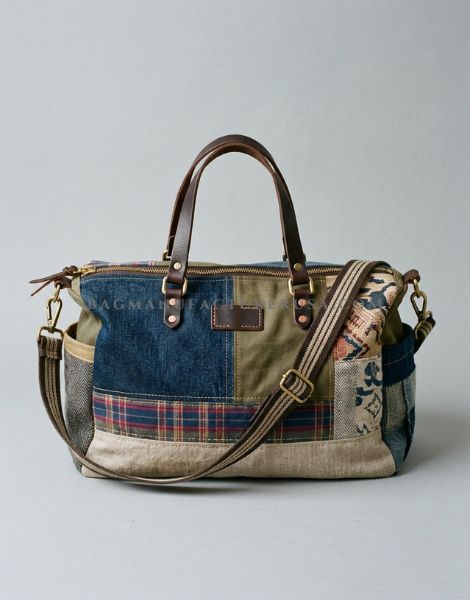
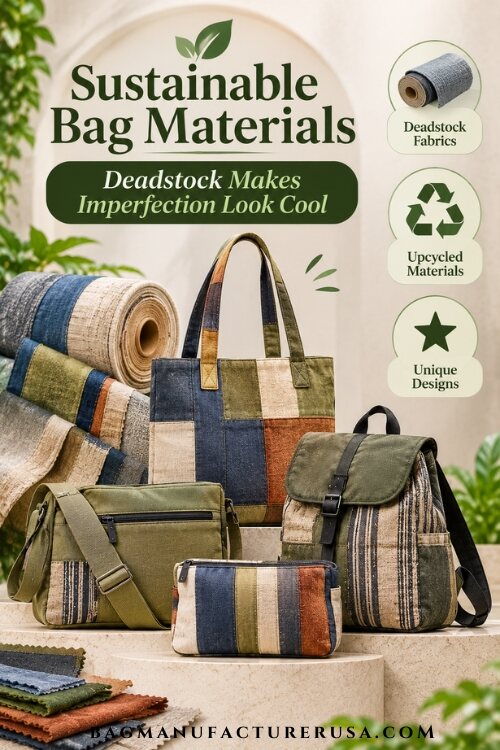
Deadstock and upcycled fabrics bring something different: unpredictability. A leftover roll of fabric can turn into a small batch of weekend bags.
Scraps can turn into pouches or patchwork totes. One production run may look slightly different from the next.
For huge, uniform orders, that can be tricky. For limited drops and trend-driven collections? It can be exactly the point.
Shoppers are increasingly surrounded by products that look identical. A bag with slight variations can feel more personal, especially when there’s a genuine material story behind it.
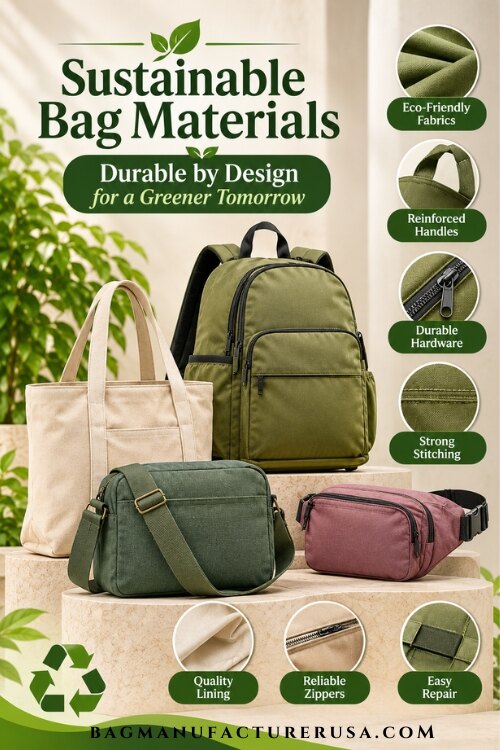
Choosing an impressive recycled fabric would fall apart the moment the handle gives up halfway through a grocery run. Sustainability demands more durability.
Buyers should look at reinforcement, lining, hardware, handles, zippers, stitching, and repair prospects alongside the headline material. After all, a bag that stays in rotation for years has an edge over one that needs superseding every season. Sometimes longevity can seem not so exciting, but it is often one of the most useful.
For retailers and business owners revamping their bag collections, reliable bag manufacturers and suppliers can help curate a thoughtful collection that gives customers more reasons to carry sustainability everywhere.